Showing posts with label design. Show all posts

Antidesign

Antidesign is an inquiry into 'that which is not designed'—recognizing that design can sometimes obstruct or detract from function and beauty. It examines human constructions (and sometimes natural occurrences) that have zero focus on aesthetics.


Depth of Place (Update 2)

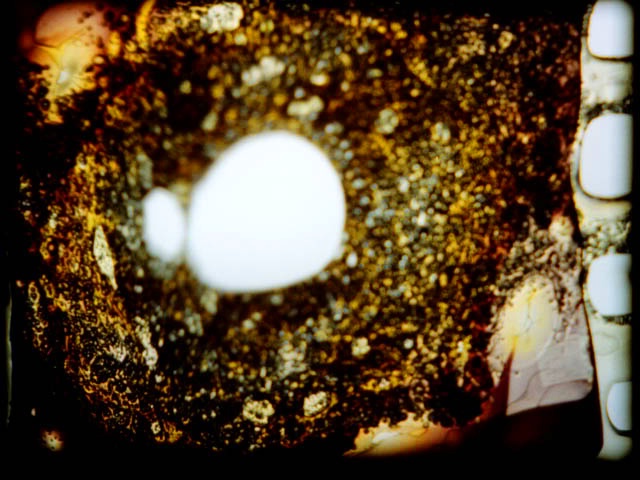
Here is another new image from my "Depth of Place" series of abstract photographs:


Depth of Place (Update 1)


Additional photos from the "Depth of Place" set posted earlier this year.

Quilt Patterns


These are the quilt patterns I designed that my grandmother will make…eventually.

Biologically Inspired Design

Tokyo metropolitan rail system, as interpreted by slime mold.This is the kind of thing that really excites me: fundamental connections among biology, design, and human behavior. A group of Japanese scientists has shown that "the slime mold Physarum polycephalum forms networks with comparable efficiency, fault tolerance, and cost to those of real-world infrastructure networks--in this case, the Tokyo rail system."
Comparing an organism's behavior to a designed human system, then learning from that organism's 'reinterpretation' of the system in order to develop better models of design...amazing.
Link to summary article and full report ("Rules for Biologically Inspired Adaptive Network Design").

Max designed this track, then we built it.

This morning, Max sketched his design for a train track on paper, then we built it.

A couple of good design links via Boing Boing: Retro-futuristic artwork; some images from Masquerade, The Amazing Camouflage Deceptions of World War II.

'For All Seasons', a small interactive animation at k10k, is simple and beautiful. I think I'll share it with my kids.
Rose and I went to see Bruce Mau speak last night. Aside from the fact that he gave an inspiring, holistic, invigorating talk about the future of design (see Massive Change), he also had one of the most perfect PowerPoint presentations I've ever seen. The presentation:
  • Supplemented what he was presenting with carefully selected images and (occasionally) words
  • Did not take away from his presence as a speaker (in fact most of the time the audience was focused on Mau and not the giant screen)
  • Did not contain a single bullet point
The best way I can think to describe the slides is that they "weren't there"...as a member of the audience, you didn't think about or notice them apart from the speaker and his message.
My brother was kind enough to invite me to the OSU-Northwestern game (at OSU) on Saturday, and I have a couple observations: First, being in a contained crowd of 100,000 people is a bit intimidating. My architectural mind couldn't help but go through mental exiting capacity studies, and the sympathetic vibrations I felt as the crowd clapped in rhythm to the school song were the same type of vibrations that brought the Tacoma Narrows bridge down. My paranoid mind was sifting through crowd control techniques and scaling out the approximate size of a 767 using the tick marks on the field, as a precursor to guessing the damage that the stadium would take should the aircraft in question impact during the game (I figure about 30% loss).

The second observation I had, this being my first OSU home game, is that I like college football, at least in this environment, much more than professional football. It's nice to attend a game where the primary noise is the *crowd*, not the commercial, ad-driven hysteria that comes along with most professional sports.
A few months ago on a flight back to CLE from LAS, I was observing the land formations, the dry stream beds, the jutting of the rock in the desert, the occasional human intervention in the form of a farm stead or small town. I thought, 'these patterns are a part of me; I understand the natural way that things form.' I remember telling my wife about it at the time.

I continued the strain of thought to further articulate something I've always known, but do not acknowledge much (or enough), and something which forcibly rears its head into my consciousness from time to time:

There are strong analogs in the behavior of almost everything that exists. Nature behaves the way human economies do; traffic behaves the way water flows; social structures mimic various biological patterns; etc. There are nearly infinite examples.

I am a simple but happy person, and have been blessed with a wonderful life thus far. However, if there's one thing I can say that I'm honestly a bit disappointed about, it's that I've not even begun to effectively exploit this intuitive understanding.
Microplaces

I am a connoisseur of delightful spots. Not in the graphic sense, like spots on a dog; rather, “microplaces”. Precise locations whose characteristics can be enjoyed in the same manner as fine food, wine, art, music, performance. This type of experience goes beyond a simple appreciation for architecture or urban design. This is the full intellectual-sensory act of sitting-standing-lying in a specific place that is delightful (or horrible, if you prefer) in every capacity and drinking it in--sight, sound, material-tactile, smell, microclimate, human proximity and activity. A few meters variance can change everything. It is the type of experience that cannot be photographed; the written word comes closest, but any description still leaves much lacking.

Ask my wife; she knows that I must find the perfect spot in a restaurant, park, room, etc., and then place myself there (or, inflict my specificities on my whole family if they are accompanying me). Am I difficult to live with? Yes, sometimes. But it’s just another one of the ways that I enjoy life.

For a few minutes, where you place yourself within a place can make all the difference in the world.
Found this: Meccano. Wow, very cool.
If there is one thing I believe, it is that enterprise is only of value when it is fulfilling some real human need. (Of course, the needs of some are the desires of others, but that is a matter of perception, and another discussion altogether.) For example, the only reason to build a building is to meet the needs of those who would inhabit that building.

There are exceptions to this notion. Specifically, I believe that sometimes the results of enterprise, often "things"--buildings, cities, institutions, can become nobler than the people who inhabit or use them. In my case, I see a city that deserves better inhabitants--a population that lives a life noble and worthy of the city's beauty and gifts. The bones and spirit of the city cry out for people who live up to its glorious past and its current potential.
A current thought: Living things exist in a state far from equilibrium. That is, they need a constant stream of matter and energy flowing through them in order to survive. Cities are living things. In an economic sense cities need a similar flow, but it is not matter and energy, it is money. Practically, cities need to produce things that other cities, other countries want. It is a classic example of an export economy, an economy with a trade surplus. Without this city-scale trade surplus, money, the lifeblood of a regional economy, will not flow. Without this flow the city will approach equilibrium. Equilibrium is death.

Many urban cores in America are approaching equilibrium.
I was constantly battling with the front entrance doors of the Terminal Tower until I realized that they all swung to the left.
Flying into the city, I notice the pattern of the pre-WWII urban fabric: Housing, housing, housing, housing, institution; housing, housing, housing, housing, institution; housing, housing, housing, housing.

Later, I notice the post-WWII form: Housing, housing, housing, housing; housing, housing, housing, housing.

Lately, I’ve been thinking about something that disturbs me just a bit. I’m not sure if it disturbs me because I’m afraid the thought is elitist, or because I’m afraid the thought might actually be true.

Here’s the thought: There are places, both natural and man-made, that have more dignity than their inhabitants. In fact, although they are not living things, these places and buildings seem to be more human, to have more spirit and character than the homo sapiens who inhabit them.

To me, it’s sad when a building has more life than the people in it. I seem to be observing this all to often recently. Perhaps it’s because I keep interacting with people who have a hollow space inside them where substance, caring, the human spirit should be.

A few days ago I drove around campus looking around, saying to myself, "Oh, I've been there," or "Oh, I haven't done that yet." As I was doing this I realized that I'm really going to miss Cornell. It's the combination of the quality of the institution and the sheer beauty of the place that creates this emotion. The large, sprawling campus is nicely broken into smaller exterior spaces, nearly all of them pedestrian-oriented. People walk everywhere--the foot dominates the tire by far. Nearly all of the buildings on campus are fine examples of their architectural style: traditional, modern or post-modern. Vegetation abounds, and views are carefully constructed. It's truly a "human" place.
Skyscrapers have never been just a fad. They've never faded to the margins—and probably won't—because in their American way they continue a much deeper tradition of upward striving, from East Asian pagodas and the ziggurats of Mesopotamia to the pyramids of Egypt, Central America, and Angkor Wat. (Thanks, Rose.)