As Rosie and I sit here and work on our various tasks (I, studying; she, earning some money), we are deeply engrossed in some good music. I am reminded that music, at its best, can invoke a state of higher being. I remember a Moby concert two months ago – an event so intense, so emotional, so sincere that it was almost transformative. I remember a “weekend with the guys” last year where spontaneous drumming (on cans, buckets and such things) ended up lasting for hours and generated a true emotional connection among us. It was the only meaningful thing that happened that weekend. I remember the band I was in during my undergraduate years. We weren’t much, but what we did, we did pretty well. Seven (!) of us: Four acoustic guitarists, one electric, one bass and me on drums. The guitarists all sang and harmonized quite well – we were a sort of folk/rock thing. I’ve been out of that world for so long. But what a feeling it was …
Aside from the fact that I just took a final exam and my right hand is about to fall off (from writing), today was a pretty good day. Nothing particularly special, but I was reminded of some of the reasons why (because there are several reasons why not) Cornell is a pretty interesting place.
Reason number one: Cornell has a bell tower, there are real chimes in it, and people play them, by hand, every day. We're not just talking about two-chimes-means-it's-two-o'clock here, either. These are songs, and they are long and complicated. Today, I was walking across campus to the tune of "Walking in A Winter Wonderland," briskly broadcast from McGraw Tower through the gently falling snow. I have so far attended two Institutions of Higher Learning that had artificial chimes which were pre-recorded; the only feeling you would experience when they would play is "Wow, I go to a school that can't afford real chimes." And then sometimes the speakers would crackle, reminding you again that it was a recording, and man, then you really felt lame. Real chimes are, without question, neato.
Reason number two: On the bus I rode home today there were eight seats (it was a small bus). The seats were all full, for a total of sixteen people, not including the driver. Here's the part I like: I counted conversations in six languages: Russian (I think), Hindi, German, Korean, Chinese (the loudest), and English. Love it.
Problems in The Shower
As many of you already know, I have scale problems from time to time. I get so overwhelmed by the sheer magnitude and complexity of everything, and my place within it, that I am driven to mindless rambling and vast consumption of Life™ cereal.
So today, I was in the shower, thinking. (I know this is rumored to be one of only two places men usually think, but I assure you, I have a mental life outside the bathroom.) I was thinking about the fact that when I lived in Europe, I only took showers about once per week. Having lived in America my entire life and now long re-adjusted to its particulars, I take a shower nearly every day. So I was thinking, “Man, what a luxury. I mean really – that’s a lot of water!”
I thought of the water I used, and then the water used by all of the showers in my building, then all of the water used by all of the showers in the entire region, then the state, then the country… I stopped at the country because we take more showers than anybody else. Like I said, scale problems. But think about it: taking a shower really is a luxury – there are many other ways to maintain your hygiene. We have so many things ‘round here that we take for granted, which are truly luxuries in many parts of the world. I know this sounds like a typical “I’m feelin’ guilty today for being an American speech” that everyone is so sick of hearing, but oh well. If it bothers you then go away. I’m having scale problems and I don’t want to be disturbed.
In the 1950s, over 15 million homes were built in the United States. Most of them were in the suburbs. This is their story.
Observation No. 6
You cannot be sincere and hip at the same time. Being sincere prevents you from being aloof. If you're not aloof you cannot be detached from everything in that oh-so-fashionably-careless kind of way. If you can't be detached - if things matter to you - you can't be hip.
A bit of circular reasoning, I know, but hey, it works for me.
On Being A Generalist
Just sittin’ here, eating a donut, drinking some coffee, taking a break from the studies, ruminating about being a generalist. Here’s to the generalists of the world… the ones who a) can’t make up their mind about what they want to do with their life (aka “what I want to be when I grow up,” b) get bored to tears when they are committed to doing anything too specific for any significant amount of time, c) are interested in so many things that they always feel like there is something out there they are missing and d) keep switching their focus right when they’re getting good at something (taking care to do it just before they become adept at the task at hand and actually have something productive to offer society).
We generalists just can’t get too much of that good ol’ big picture. In fact, we try to keep stepping back until everything makes sense. The irony of this activity is, everything will never, ever, ever make sense. And if it ever did, it would probably be too much to handle and it would blow our minds. So generalists get frustrated a lot. We look for behavior that ties these crazy beings called humans all together. And yes, sometimes we find little hints of it – of “the truth,” the universal. But more often than not, human actions confuse us so much that we want to quickly assume the fetal position and weep like a big fat baby.
“Things” in this world do often fit together in fascinating ways – mathematics, ecosystems, human behavior, economies, etc. But life, as a rule, seems to be about the confusion of the day-to-day getting in the way of our clear view of reality. And maybe that’s a good thing. In fact, if society didn’t have things like eating, reproducing and not-dying to worry about, it would spend all of its time doing things like soul searching, creating art, discovering the meaning of life, etc., and humans might eventually figure this crazy existence out. And then, what would be the point? We’d pretty much be all done then – let’s turn out the lights, put the Earth in cold storage and go to sleep for a few millennia until our collective memory loses track of everything again.
No, that particular course of fate wouldn’t make any sense. In addition to survival, it’s a good thing society has lots of other things to distract it, such as: handing little bits of green paper back and forth, putting food on the table, creating neat personal websites, finding new ways to “add value,” getting a ski rack for the VW, and paying off credit card bills. Figuring things out should be left to the poor saps who can’t focus on one thing long enough to get their mind off everything.
Leave it to the generalists, the poor bastards.
Rosie and I saw Best in Show last night with some friends. Result: laugh till pain. I'm biased, though. I think I'd like anything that Christopher Guest and the Spinal Tap/Waiting for Guffman crew put out. I eat that stuff up. I used to know a guy who, when I asked his opinion of Waiting for Guffman, responded with, "That kind of humor is just completely lost on me." Man, that's too bad. I mean, really, too too bad.
So Opensewer Ithaca was last night. The gathering went until about midnight, and lemme tell ya, I was really hungry when we left that bar. When a human is hungy, that human tends to gravitate toward the nearest place with available food. That place, in this case, happened to be "Wendy's." I went in, purchased some fast "food," as they say, and came out to find the scattered few remaining intellectually exhausted Opensewer attendees laughing at me. “You’re eating at Wendy’s right after we just spent 5 hours talking about misplaced values and homogenization of products? Way to be consistent, Jason.”
Hey, man, I was hungry. Brain drain.
Some Thursdays are better than others for me. Thursday is the day that I’m on campus from 8:00 AM to 9:00 PM. It’s a long day. But today was a pretty good day. Today, I had a great conversation with some (very helpful) friends about something that I can’t tell you about, but if it turns out well you’ll find out soon enough, oh yes you will. Also, today I had a conversation with another graduate student and the Professor of this class, and I actually felt as if I knew what I was talking about (which is a major step for me in this particular class). You see, I almost dropped the class (although it is important) because it dealt with material that was so foreign to me, it sounded like the professor was, literally, speaking another language when he lectured. Well, eventually it sunk in (and I worked my ass off), and now I must say that I actually quite enjoy it. Isn’t life funny that way?
Also, Opensewer Ithaca (the one that Rosie and I are attending) is tomorrow and I'm pumped...
Ok, so I'm just a little bit pist. I can't believe it, but Opensewer has been plagiarized again. Now, I know I shouldn't even acknowledge these creeps by linking to them, but I'm going to anyway because they should be exposed. The most recent violation is here, and you can check out remnants of an older thief here. Send 'em a friendly hate-mail if the urge grabs you.
Why does this happen? Come on people, it's really not that difficult to come up with your own stuff! I suppose that once a site starts getting decent traffic and exposure, things like this are expected to happen once in a while. But it's not like anyone on the web is doing anything so creative, so unique, that it simply cannot be surpassed and so it must be copied! I remember almost a year ago when this happened to k10k. Now it's happened to OS twice, and I have to tell you, it really hurts. It feels like a violation- something that you put a lot of blood, sweat and tears into and then part of it just gets ripped-off and re-used. It's so sad- these people don't even do a good job of hiding their transgressions.
So I suppose we'll send them the standard cease and desist letter, and try to put an end to it. Has this ever happened to you? I'd like you to tell me about it...
Rosie and I both posted new feature articles over at Opensewer. You know, it's really an immensely liberating feeling just to lets things off your chest once in a while...
Ithaca, New York: Where more Wall Street Journal's are wasted, lying on the front porches and in the yards of enthusiastic undergraduates ("Yeah, I'll subscribe to the WSJ - that's professional!"), than any other city I've ever seen. Some of these students' houses have scattered piles of yellowing WSJ papers twenty or thirty high in the front yard. They look like dandelions that need to be mowed away.
On Becoming An Architect
(An Incomplete Theory)
(An Incomplete Theory)
Okay – I think I have a few things figured out about becoming an architect. Time has changed things. It has changed the definition of an architect, and the influence that an architect has. I'm going to attempt to address this.
When a person first dreams about becoming an architect, he dreams about the things he can build. However, it is quickly realized that he has no real say in what gets built. Someone else decides that – someone with money, someone who is an entrepreneur… someone who has taken a risk and gone out on a limb, possibly putting his or her own well being in jeopardy in order to place something on the earth.
So, a theory about the path one must take to become an architect – in the old sense… the master builder sense.
First, one must undertake training in design. Training in design is critical to develop a keen eye that truly sees the world. Training in design is needed to relate humans to buildings (things), and buildings (things) to the earth. It is irresponsible to mark the earth without having a firm, holistic understanding of design. However, much of what is placed on the earth is done by those who lack this understanding. Many people who mark the earth understand economics, but not humanity. This is dangerous.
Secondly, perhaps concurrently, one must undertake training in business and economics. This part of the education cannot be avoided, since money is the lifeblood (for better or for worse) that enables ideas to manifest themselves in this world. The lack of this training in designers is problematic. Why are the ones who define the environments that relate humans to the natural world so apparently unconcerned with the prevailing method a valuation that society has chosen for itself (money)? How can you design if you don’t understand the resources that it takes to physically manifest something?
Architects must reposition themselves into the role of the one who decides the essence of a thing. This is what we’ve lost over time. This is where our frustration comes from. When your training and experience includes a sophisticated understanding of design and a sophisticated understanding of economics, then you can be in a position to give birth to ideas that you yourself can implement. You can truly CREATE – not just give form to other peoples' ideas.



And Speaking of The Supernatural…
Last week on campus, walking from Econometrics class in the Ag Quad to Sibley Hall, I passed a woman, ordinary enough from a distance, walking opposite me on the sidewalk. As I approached her, I noticed that she had an absolutely horrified look on her face, and she was staring up at the sky, darting her eyes in different directions. She did not notice me. As soon as I passed her, I got a bad feeling, what could almost be described as an aphysical “pain” in my chest. It was not real pain, but some psycho-spiritual thing that had just gone down. For the next few minutes I was literally afraid – I kept watching my back. I passed through the music building, where I knew someone would be playing the piano, and this would make me feel better... mitigate the effects of what had just happened. Or at least that was the theory. I did feel a bit better after passing through, but I kept eyes in the back of my head for the rest of the day. I’ve never been superstitious, but this was genuinely strange.
Things That Are Real
Lately I've been thinking about that which is "real." The questions in my head go something like this: What is real, exactly? What does it mean to us these days? Is the internet real? Does real necessarily mean physical? Probably not, but...
Right now, I'm studying real estate. As you may imagine, there are bundles of legal definitions that attempt to identify just what constitutes "the real."
Personally, I like to think of real as things you can feel, things you can kick, things that have roots in the ground. No matter how involved I get in the study and creation of "intellectual goods" (websites, academic papers, blogs), I can't escape my desire to place physical things in the world.
Architecture Is A Way of Seeing The World
I have some bad news for the consulting and IT professionals of the world: the word “architect” is not a verb, and you’re not allowed to use it. There is no such thing as "architecting" a solution. And contrary to popular belief, you can’t "rearchitect" a server. Using these words in front of your peers or your boss my make you appear credible, but to the rest of the (literate) world, it just makes you look silly.
I was told last night that I will always be an architect, no matter where my professional endeavors lead me. This happened during the course of a discussion I was having with a (former) architect who had become a project manager for a large real estate asset management company. “You never lose the world-view that training in design and architecture gives you,” he said.
Architecture is a way of seeing the world. It is a type of training, experience and inherent talent that enables individuals to truly see the physical and experiential realm (space, both real and conceptual), and understand its implication on human existence. Architecture manifests itself when people design things- buildings, interior spaces, exterior spaces, products, and graphic communications… nearly anything. With respect to what I said earlier, the design of less obviously related things such as the development of strategic plans for companies, or the creation of peace treaties, can indeed approach something that could be considered “architecture.”
However, you can’t understand architecture unless you are trained and experienced in design- in the creation of ideas where there were no ideas before. And you can’t understand design until you understand how to see the world with uncluttered eyes.
Secrets of Brewing Coffee Using A Drip-Type Coffee Maker
- You MUST start with whole beans- none of this Maxwell House crap. And don’t grind the beans until you’re ready to brew the coffee- they’ll stay fresher that way. Store the un-ground beans in the refrigerator or freezer.
- Measuring: I use 1 teaspoon of un-ground beans for every 6 oz. cup. This makes strong coffee. I like strong coffee. If you don't like strong coffee then you should drink, like, chocolate milk or something. (BTW- make only as much coffee as you need. Never reheat cold coffee and never re-brew coffee.)
- Grind the beans thoroughly, until the coffee has a fine texture. Don't leave big chunks in the mix.
- Use a cone-type paper filter (you must have a coffee maker that takes a cone-type filter). The cone seems to concentrate the flavor. Melitta #2 or #4 are the best.
- Use cold, filtered water (don't use distilled water). Remember, 6 oz. (1 cup) of water for every 1 teaspoon of un-ground beans. Your coffee maker should have measurement markings.
- Brew the coffee. Hopefully, you own a coffee maker with a long brew time. Longer is better.
- This is the most important step, and if you don’t do this you’ll screw everything up. If your coffee maker is the type that has a burner to keep the coffee warm, let the brewed coffee sit on the burner for 3-4 minutes after all of the coffee has finished brewing. THEN, POUR ALL OF THE COFFEE INTO AN INSULATED CARAFE. This will accomplish two things: a) It will keep the coffee from getting scorched on the burner (which will ruin the coffee), and b) it will properly mix the coffee so it has equal density throughout.
You see, when the coffee is brewed into the pot, it is sort of “stratified.” It has different layers of density throughout, and different flavors. When you pour the first cup, it will taste different than the last cup. If you pour the finished coffee into a carafe, the coffee will get mixed well and the entire pot will have a consistent taste. Thermos makes the best carafes.
Like I said, if you skip step 7, don’t even bother making coffee, you pathetic loser. Go buy a cup instead at your local, non-chain coffeehouse. Coffee is an acquired taste, right? So if you don't like it, if you don't love it, then don't bother going through the trouble. Of course, this whole discussion has all been about Cafe Americano, the watered down version of true coffee. But that's something we'll just have to address later. Enjoy!
Ok, so I have certain things on my mind. Now, when one "vents," one vents about the things that are currently occupying one's consciousness. So, with that thought under consideration, here is the Word of The Day (and I apologize in advance): Heteroskedasticity.
I haven't had a whole lot to say lately because most of what's been going through my head looks something like:

Ah, yes, academia. Waking the brain after several years of... I won't say "rest" because that's not really true... several years of... let's say a comfortable routine... has not been all that easy in certain areas. Some of the "areas" to which I'm referring include math.
Now, don't get me wrong, I was pretty good at math in high school, and college too for that matter. In eighth grade I was even in "MathCounts," one of those geeky competitions for kids who can't think of a good enough excuse to convince their parents that they shouldn't have to participate. But we all know what happens to the brain as it falls into a routine. Atrophy. When I graduated from college, taking a derivative was like breathing. Now I have to stuggle just to remember the order of operations. (Remember that from seventh grade? Exponents first, division and multiplication second, addition and subtraction third... oh, boy.) And it's only been four years. If ya don't use it, you lose it, I suppose.
It seems that no matter where I am in life, I always seem to want to put myself in a situation where I'm not comfortable anymore. And we ask ourselves: "Why?"
Just sittin' here thinking about things, taking notes, thinking about things, and decided that I should make a brief (however incomplete) list of films that have had a pronounced affect on me. These films somehow transcend simply being works of art, and truly speak to the soul. If you have not had the opportunity to see all of these films at some point within the past several years, your life may be somewhat lacking. Expose yourself to these works and realize that there still may be magic left in the world.
Princess Mononoke
This film speaks to many issues about how we inhabit the Earth, and humans' relationship to nature. It's quite moving, and more mature than many films I've seen.
Brazil
Brazil defies description. To say it's a moral tale of one man's revolt against bureaucracy tells only part of the story. It must be seen to be believed.
Run Lola Run
Ultimately about fate, this film seems rather simple in premise, on the surface. But looking deeper reveals complexity. Kind of like classical music. Although this film is nothing like classical music...
The City of Lost Children
Magical, beautiful, simple and complex all at once. Is it better than Delicatessen? Hard to say. But the film will leave you speechless.
A bit of support for yesterday's theory about college students, from the barista at Stella's. I said, "Hey, man, why don't any of the students at Cornell talk to each other? I'm from Cleveland and we talk to each other there."
(I said this after riding the bus to campus- it was so full and people were jammed in and uncomfortable, but they were all afraid to talk to each other and ask each other to move, so everyone just stayed jammed and uncomfortable. Refusal to communicate prevented the people at the front of the bus from learning that there was space at the back of the bus. "Hey, tell them there's space back here!" I said. No response.)
So the barista looked at me, at first a little confused, and then said, "Yeah, you know, I guess it's just that everyone is caught up in their own little world. They only talk to people they already know."
So I suppose that if someone on the bus fell to the floor and started having convulsions, people would just sit/stand there, quietly staring out the window, thinking about Statistics class or the party the night before. Mmm-hmm.
The story so far (a small slice of it, at least)... So I was an undergraduate student, studying architecture at Kent State University from 1991 to 1996. (Yes, five years... ahem. It was a five year program, okay?) And then I graduated, and then I began working as an architect in Cleveland. This lasted about three-and-a-half years. Now I'm a graduate student at Cornell University, studying real estate. Alright. That's the story for today, and here's what I have observed. On large university campuses, undergraduate students don't seem to have the powers of observation and social interaction. At least not outside their circles of friends. I don't know if it's a protection mechanism built-in to freshmen or what, but these kids are so self-contained, so self-centered. If you pass one on the street and say, "hi," they'll look up at you, astonished, and sheepishly reply, "uuh... hi?"
It's really a bit sad.
Plink Plink
On Cornell's campus, there is a pedestrian walkway that traverses the roof of the extended ground floor of the Olin Library. The Olin Library is a classic 1970s modernist building, that some have referred to as "looking like a punch-card."
Now, this walkway to which I am referring has become one of my favorite little places to encounter as I walk across campus. You see, due to the fact that the walkway is on the roof of a lower part of the building, it sometimes has rocks scattered about on it (the rocks are the ballast from the roof below). These rocks are the fun part. When you kick them, as they bounce and roll across the concrete pavers, they go "plink, pl-plink plink plink" in a most beautiful array of staccato tones. It sounds kind of like a xylophone. Hmmm... building-as-musical-instrument. Life shows us beauty in the most unexpected places.
Ithaca is one of the most beautiful places on Earth. What a change from the industrial cathedral of Cleveland-- Rosie has already stopped sneezing as often as she used to.
So the lifestyle change from the work-a-day world to academia-world is proving to be a slight shock, even though I've only been out of undergraduate school for three-and-a-half years. I mean I'm not reeling or anything, but let's just say you can't leave graduate studies at the office. No more 'home by 7:00 PM and forget about the day.' Not even a chance. Don't get me wrong-- I love what I'm studying. It's just tough to start letting a non-personal endeavour permeate my life again. But change reminds us of who we are, so...
Over at Opensewer we have quite a few things a brewin'. The artist database structure is complete, thanks to Scott, and we'll be implementing it over the next few months. We have many new artists booked, notably photographer Deborah Pinter and filmmaker Robert Banks. We're quite excited about Robert because this is the first time that we'll be exhibiting time-based media (film, in this case) on OS. And this guy's work is wired, so get ready. (For more on Robert Banks, see the entry for Tuesday, August 8, 2000.) Oh, and last week the folks at Pyra selected OS as "blog of the week." Yay!
Ah, morning coffee. Calm before the storm. A moment of relaxation before the day begins.
Boy, do I sound like a 2:30 PM soap-opera television commercial or what? But I like morning coffee, I do. It’s really quite a Zen thing. I suppose, however, it’s not just about the coffee. It’s about the stillness. Contemplation, silence. If firmly believe that this good for the soul. It’s good for self-awareness.
In an essay I read some time ago (I can’t remember what it was called or who it was about), a man, about sixty years old, who was well-respected in this world as a thinker, was being asked about what he thought made him different from the rest of us. What gave him the ability to think about things in a way that seemed a bit deeper, a bit more insightful than the rest of the world?
There is nothing special about me,” he answered. “Anyone has the ability to think deeply and critically. However, one thing that has worked for me, in particular, is to spend one-half hour each morning doing absolutely nothing, except thinking. No reading, no talking, no writing, no figuring things out, no planning for the day. That simple act, the act of denying intrusions from entering the mind for just a brief period each day, has made all the difference in my life.”
You know what? He knew what he was talking about.
So the packing has begun. Progress: None. Pace: Glacial.
Resolving not to be forced to live out of boxes for multiple weeks, we have delayed the majority of our packing until now, five days before we move. So to start off right, we decided to kick off the process with a party, which in my opinion is the proper way to kick most things off. It was one of those "just a few special friends, oh yes, we're keeping it quite small, we want to really spend some quality time with our closest chums" kind of things. Yes, great idea. Except for the fact that we ended up staying until 4:00 AM, we're walking dead this morning, now we have to meet our parents for dinner at 2:00 PM today, and we haven't gotten a stitch of packing done yet.
So far, so good!
This is awesome... an interview on NPR's Fresh Air with Craig McCracken, creator of the Powerpuff Girls. Fast forward to the 36:00 minute marker in the show to hear it! (Real Audio Player required.)
Over at Opensewer we've started an action against Wal-Mart. Essentially, we're endorsing a boycott of the store. Does this action hold any chance of making a real difference? If not, what actions would be more effective? We're currently organizing future on-site interventions (where we will hand out information and talk to people face to face), to bring the message closer to home. Other than that... What do you think?
Robert Banks... boy genius. Rosie and I had quite an interesting session today with Robert, shooting footage for several films, including an OS promo piece. Look for Robert's work to premier soon on Opensewer. He'll also be showing several of his films at the BBC Short Film Festival in London this September. So, if you're in the neighborhood, take a moment to drop by. Some photos from today's shoot:


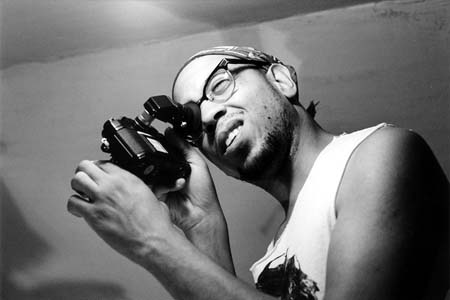
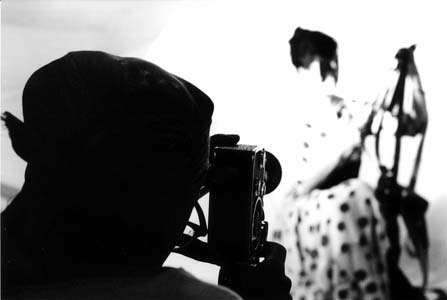
Action is up at Opensewer. Check it, and do something. Today, we're off to dirty up some 8mm stock with bleeding-edge filmmaker Robert Banks. Wait until you see this...
The Leader
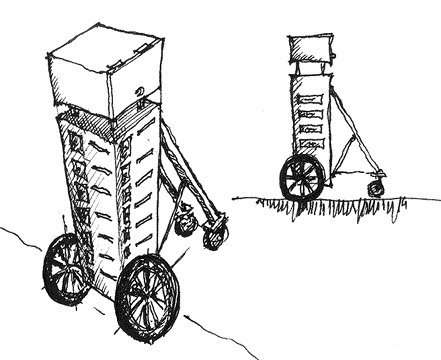
A sketch of the Coliseum in Rome... but just the part I'm interested in: the guts, the structure under the floor where the fighters and animals were staged before battle.

Rome was such an intense city. My second trip to Italy, the one I made with Rosie, didn't even include a trip there. This surprised many people: "How can you not go to Rome?"
Rome is arguably the most metropolitan city in Italy (some would say Milan); it feels a bit like an older, more ornamental, smaller New York City. It's noisy, complex, long, a bit rowdy, and full of Gypsies. And there are just too many churches, sculptures, fountains and too many incoming train tracks at the stazione.
June 1994: So we decided to go to St. Peter's Basilica on free day, the day of the week where everyone is allowed into the Vatican, the Sistine Chapel, etc., free of charge. I think it was Tuesday. We thought this would be a great idea, and it would have been... had 300,000 other tourists and Italians not come up with exactly the same idea.
Needless to say, we were in "line" for a large portion of the day (I say "line" facetiously because Italians have no concept of the "line." To them, line up means "everybody rush toward the entrance and cram together until nobody can move and everyone is pissed-off and yelling at each other").
We were fortunate enough to be waiting next to a class of Sicilian elementary students. Let me assure you, Sicilian elementary students are approximately 500 times louder and more obnoxious than your standard issue Italian elementary students (which are, in turn, 500 times louder than American elementary students). These kids were climbing the battered walls of the Vatican, apparently thinking that this would allow them to get in before everyone else. They were the most animated kids I'd ever seen, and they had a leader.
There was one little dark-haired girl, the same age as the rest, that seemed to be running the show. She was the ringleader; she bossed them around, verbalizing commands with words and arms flying everywhere. She was in control; it was amazing. It was one of those times when you really realize just how different cultures can be. Kids in America simply don't have that kind of self-awareness. I'd never seen a person with such confidence, ever, and she was 9 years old.
I think, some day, she may be running the world.
Subscribe to:
Posts (Atom)